




The sacred home of the snow leopard
The Migration of the Chiru
The sacred home of the snow leopard
The Migration of the Chiru

10Days /Oct-Feb




Contact us

Back to top



Submit to agree to our
Privacy Policy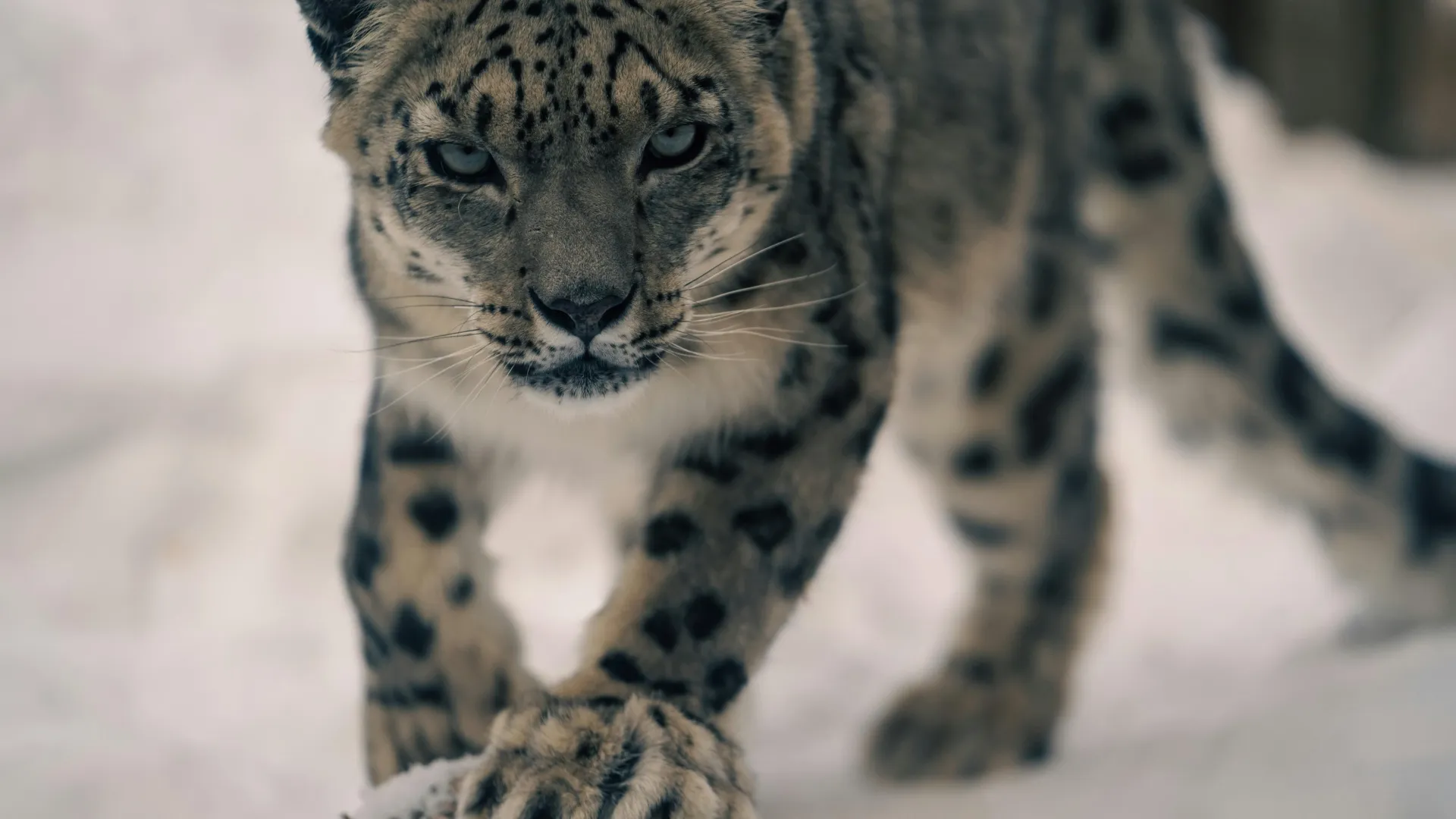
The sacred home of the snow leopard
The Migration of the Chiru
10Days /Oct-Feb


10Days / Oct–Feb

From $4300
The Three Rivers Source National Park in the Qinghai-Tibet Plateau, with an average elevation of around 4,600 meters, is an ideal destination for adventurers. Despite the harsh climate and thin air, the resilience of life is unyielding. Over 20 species of animals, including Snow Leopards, Thorold's Deer , Wild Yaks, Chiru, Kiang, and Xingzang Gazelles, roam freely here.
This place is home to ancient Tibetan soldiers and civilians who have lived, bred, and practiced Tibetan Buddhism here. They advocate for respect for life and nature. Both the residents of the Tibetan villages and the monks in the monasteries have protected the birds and animals in this area for generations.
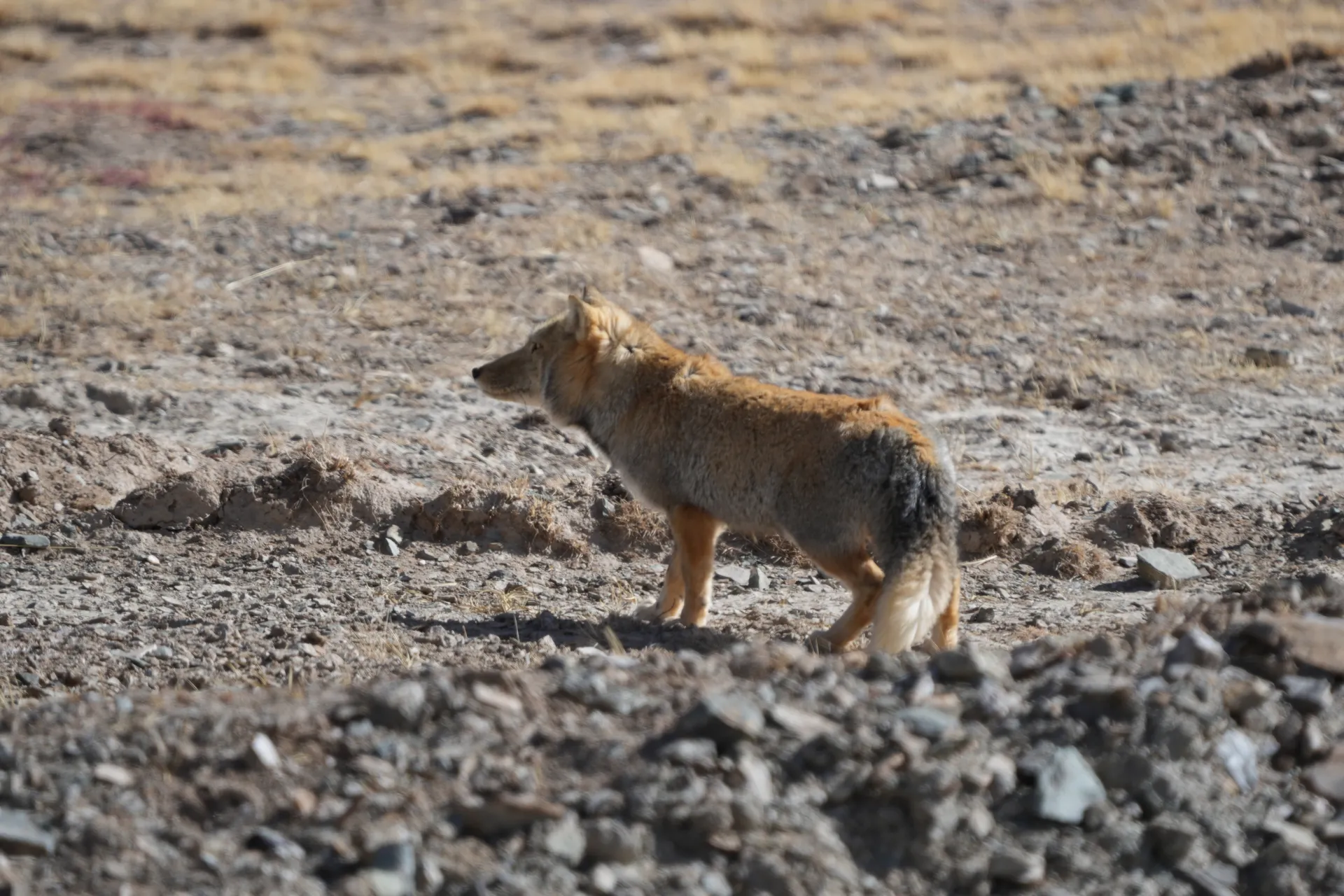
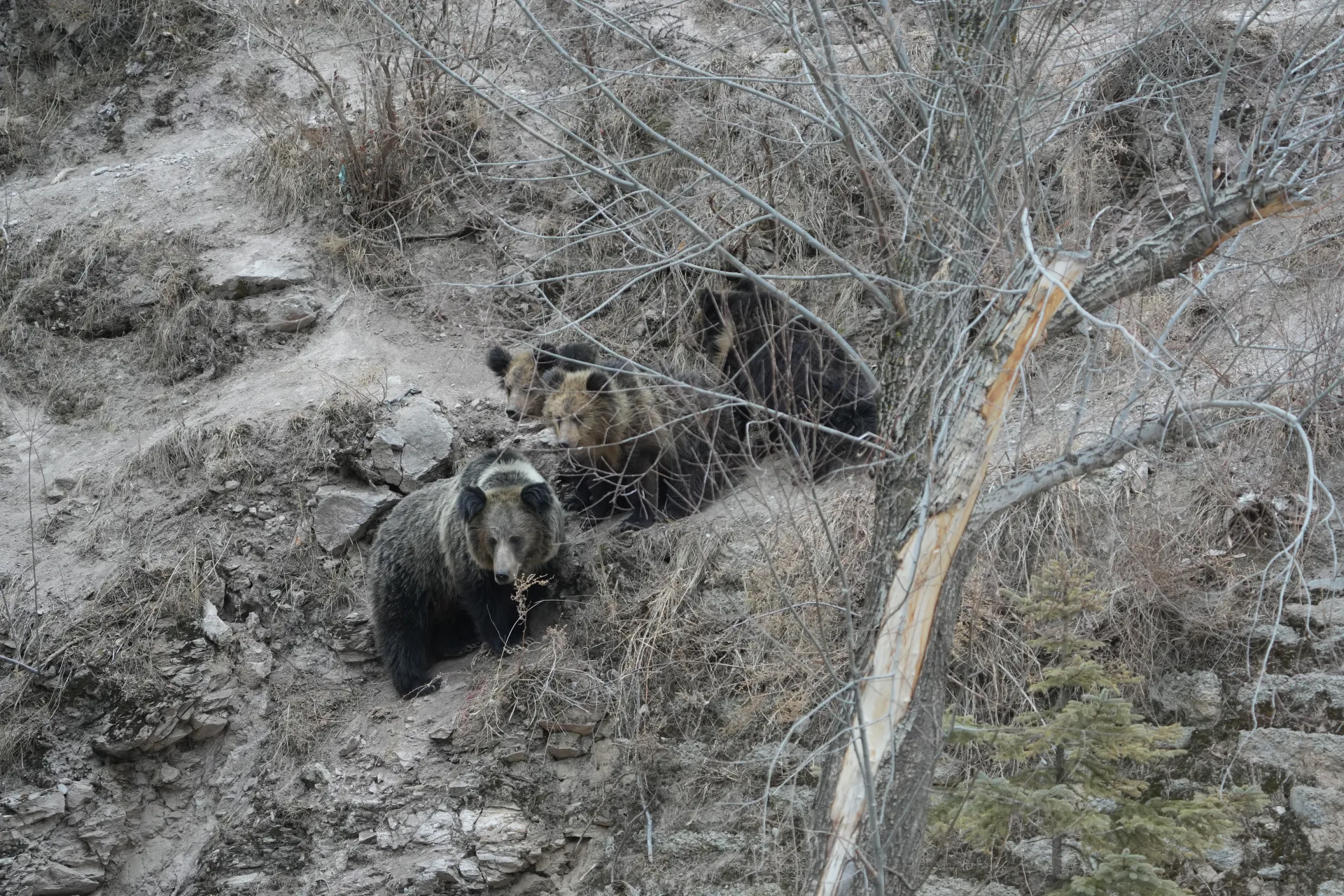
You will depart from Yushu in the Qinghai-Tibet Plateau and travel to Hoh Xil, where you will observe Tibetan Brown Bears and track the movements of Snow Leopards, witnessing firsthand the miraculous migration of Tibetan Antelopes. Under the guidance of Bestecotours’ leaders and local experts, you will also conduct field research on various wildlife species such as the Bar-headed Goose, Wild Yak,Kiang,Thorold's Deer, Blue Sheep, Tibetan Fox and Black-necked Crane.
You will live among the Tibetan residents who inhabit the valleys where Snow Leopards reside, immersing yourself in their unique culture. We will also visit ancient monasteries, experiencing firsthand the beautiful harmony between humans and nature on this magical land.
Trip Highlights

Why BestEcotours?
The Sanjiangyuan National Park on the Qinghai-Tibet Plateau is the last major sanctuary for Central Asian wildlife. Naturally, an adventure on the plateau requires adequate safety, comfort and careful planning. We have crafted a 10-day wildlife expedition across the Qinghai-Tibet Plateau for you – you will witness the spectacular sight of thousands of Tibetan antelopes migrating in the uninhabited Hoh Xil region, track Snow Leopards in the Angsai Grand Canyon, and explore the plateau’s population of Tibetan Brown Bears, Tibetan Wolf, Tibetan Fox, Eurasian Lynx, and other large predators, as well as the little-known lives of ungulates such as Wild Yak, kiang, Blue Sheep, Tibetan Argali, Tibetan Gazelle, Chiru, White-lipped Deer and Alpine Musk Deer.
If you were to ask, ‘Where in the world is the easiest place to spot snow leopards?’, Sanjiangyuan National Park would certainly be one of the best answers. Our destination is the Angsai Grand Canyon, renowned as a ‘world-class snow leopard viewing destination’. This region is home to dozens of Snow Leopards and leopards, and the Tibetan herders who have lived here for generations have coexisted with Snow Leopards in the same ecosystem for over a thousand years. China boasts the world’s largest and relatively well-preserved snow leopard habitat, home to more than half of the global population—which is precisely why we will have greater opportunities to encounter these elusive creatures here.
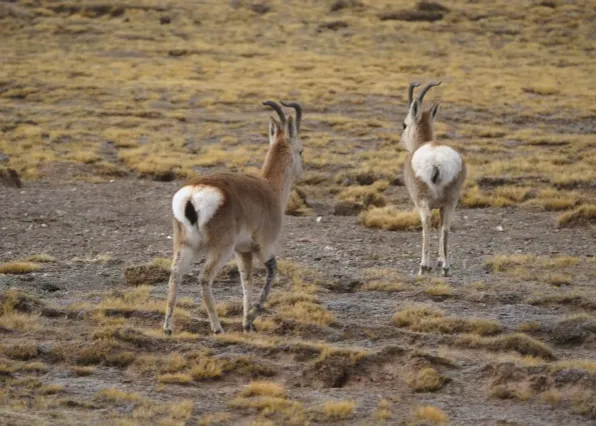
The Chiru is a species endemic to the Qinghai-Tibet Plateau. Their mass migration of nearly 400 kilometres to give birth is one of the few remaining epic migratory spectacles on Earth. The migration takes place annually between May and July. We venture deep into the Hoh Xil Nature Reserve, a region rarely visited by foreigners, to explore the true wilderness.
Located in the heart of the Qinghai-Tibet Plateau, Sanjiangyuan National Park is one of the most biodiverse high-altitude regions on Earth. It is home to such a wealth of wildlife endemic to the plateau that the sightings here will leave you in awe; there is simply no other place in the world quite like it. It is truly an encyclopaedia of high-altitude wildlife.
Throughout the entire trip, we will arrange for two tour leaders to accompany you at all times. One is an English-speaking guide responsible for coordinating your overall itinerary; not only is he fluent in spoken English, but he also possesses profound expertise in the field of ecology, as well as extensive knowledge of history and Chinese culture. In addition, we will provide you with a local animal expert from the Qinghai-Tibet Plateau who is intimately familiar with the region’s wildlife and has extensive experience in tracking snow leopards, thereby increasing your chances of encountering snow leopards and other wild animals.
Our itineraries are typically designed to begin at lower altitudes, with time set aside for acclimatisation. Once your body has adapted to the low-oxygen environment, we will gradually transition to higher altitudes. From the moment you set foot on the plateau, your acclimatisation is supported by a comprehensive and meticulous care programme. Our vehicles are equipped with on-board oxygen systems to ensure immediate oxygen supply during the journey. During the Snow Leopard tracking trek, you may also use oxygen backpacks to receive oxygen as needed.
Situated on the banks of a tributary of the Lancang River, Gar Monastery is truly a paradise where man and nature coexist in harmony. It is a cliff-hanging monastery built on a precipice at an altitude of 3,700 metres. Animals such as macaques and ibex roam freely in and out of the monastery, whilst Mainland Serow and White-lipped Deer can occasionally be glimpsed amongst the trees. Furthermore, the White Eared Pheasant, Buff-throated Monal-Partridge and Blood Pheasant also make their home here.
In addition to the ancient monastery, the area boasts spectacular canyon scenery. Alpine pastures, rivers, forests and ancient villages intertwine here.
The Qinghai-Tibet Plateau is one of the cradles of Chinese civilisation and served as a conduit for exchanges between China and the West along the Silk Road. The region preserves a wealth of authentic folk traditions, including the legends of King Gesar, the historical sites associated with Princess Wencheng, the nomadic peoples of the grasslands, the prayer flags and mani stones lining the route, Tibetan monasteries perched on cliffs, and ancient traditional salt pans – all of which will be among the sights we visit.
During your journey through the highlands, a good night’s sleep will help you acclimatise more effectively. We have carefully selected hotels throughout the itinerary that combine distinctive Tibetan character with exceptional quality; all are equipped with ambient oxygenation systems to help your body build up a tolerance to low-oxygen environments. Even in more remote areas, ambient oxygenation is an essential feature of our hotels.
The Tibetan villages in the Angsai Valley are the best places to spot snow leopards. Immersing ourselves in the daily lives of the local Tibetan community will be a truly unique experience. Thanks to information shared by the community, our observers set out each morning to locate the snow leopards and maintain radio contact to track their movements, thereby maximising our chances of spotting them.
During your travels across the Qinghai-Tibet Plateau, you will sample a wide variety of Chinese cuisine, ranging from traditional dishes to highly distinctive Tibetan fare, whilst also experiencing the dining etiquette and culture of China’s diverse ethnic groups. Each meal will feature special arrangements, such as authentic Sichuan cuisine, Tibetan banquets, wild mushroom hotpot, butter tea, tsampa, and dumplings.
Angsai is a model of ecological community development in China and is also known as the place in the world where snow leopards are most easily spotted. The Big Cat Valley community project has already helped generate nearly 2 million yuan in revenue for the local community. Here, 22 herding families have become host families, welcoming nature observers to experience life within their households. Whilst promoting community conservation, these nature experiences also offer local people the opportunity to forge a relationship between natural resources and their future livelihoods.
Throughout our service, Bestecotours remains committed to environmental principles and is dedicated to providing you with a travel experience of exceptional quality. When it comes to habitat exploration, we not only offer you opportunities for a deeper exploration of your destination, but can sometimes even take you to areas arranged exclusively for you, allowing you to discover more unique species. At the same time, we strive for the highest standards in every detail of our itinerary services to ensure we deliver on our promise of quality – a commitment for which we have long been renowned.
Itinerary

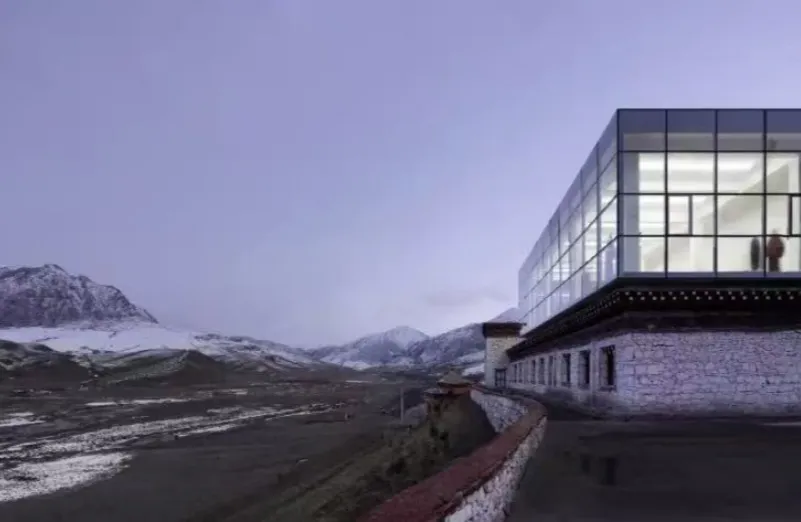
The leader of Bestecotours will meet you at the airport upon your arrival, or we can begin in Chengdu and travel together by plane to the Yushu Sanjiangyuan National Park in Qinghai. You will stay in authentic Tibetan-style accommodations that resemble a Tibetan museum filled with various artworks.
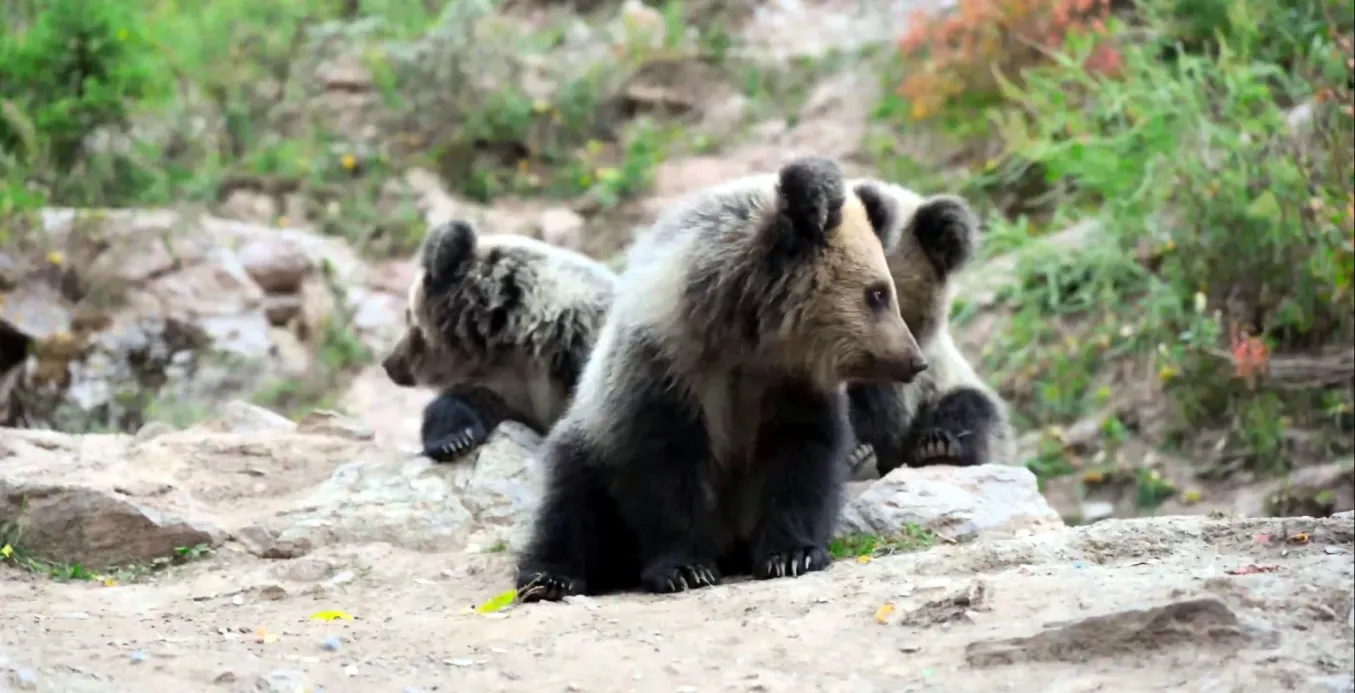
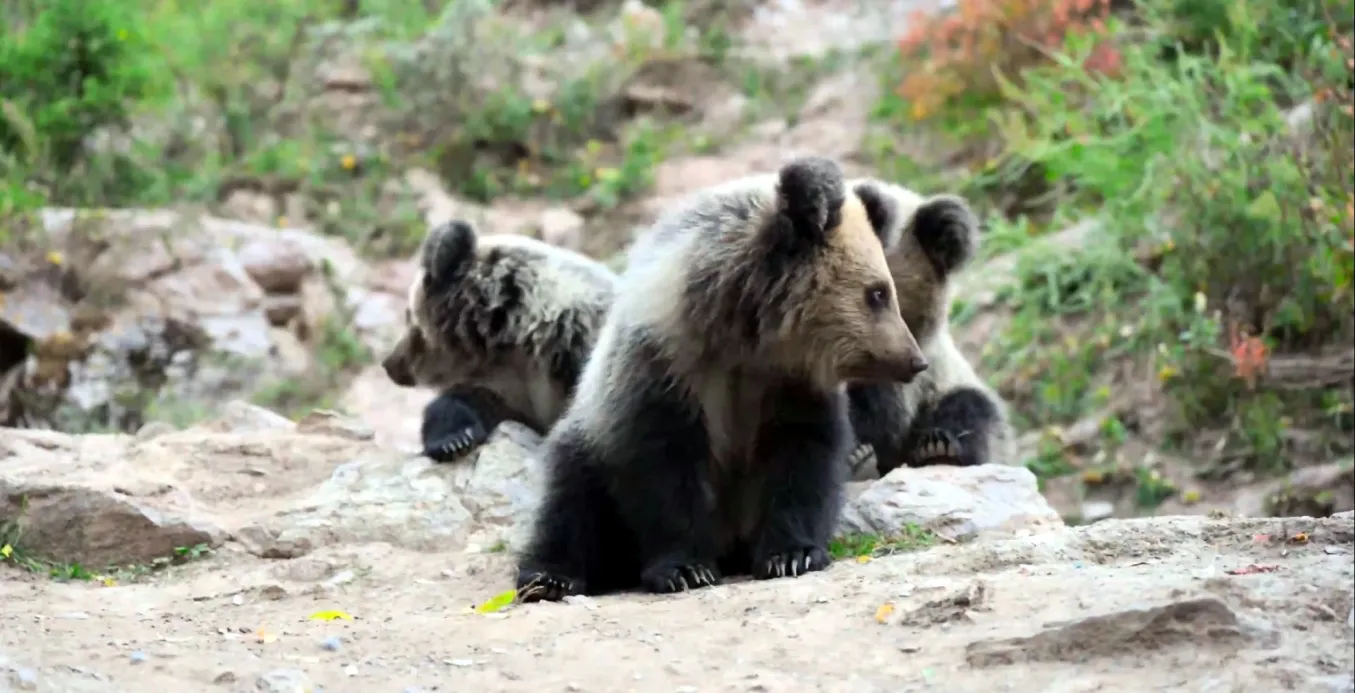
Under the guidance of the leader from Bestecotours, we headed to Xianggu Temple, a Tibetan Buddhist monastery with a history of over 700 years. Inside the temple, you could listen to the evening prayers of the monks. The monks of this temple have a tradition of feeding Tibetan Brown Bear. Here, you would also have the opportunity to encounter wild Tibetan Brown Bear, which are the largest carnivores in the Tibetan Plateau. However, due to the local people’s reverence for these bears, which is even reflected in their religious beliefs, they are rarely hunted.

Yushu’s Xinzhai Jiana Mani Stone Scripture City has been recognized as a record-breaker, featuring 3.5 billion stones inscribed with scriptures, spells, and writings. Over a period of more than 300 years, these stones were piled up one by one, leaving people standing in awe of the power of faith.
In the Tibetan region, the Tibetans have a tradition of sky burial. This practice, which has strict and sacred procedures, dates back thousands of years. The sky burial site in Yushu and Batang began over a thousand years ago. We will visit this mysterious and awe-inspiring place.
As we travel to Nangqên County, we will pass through rare canyon-forest areas of the Tibetan Plateau, which are renowned for their rich biodiversity, including the Gar Temple.
We set off along the Tang-Tibet Ancient Road, also known as the “Silk Road,” which begins in the ancient capital of Chang’an during the Tang Dynasty of ancient China and extends all the way to Lhasa. We traversed a segment of this route. Along the way, we passed by the Temple of Princess Wencheng, built in honor of Princess Wencheng, a Chinese princess who made significant contributions to the fusion of Han and Tibetan cultures in ancient times. This temple, which dates back over 1,300 years, consists of grottoes and rock carvings. Here, we sought out some of the unique birds and animals found only in the plateau. At Bai-Zha Forest Farm, we aimed to find two bird species rarely seen elsewhere – the Tibetan thrush and the brown-eared bulbul.
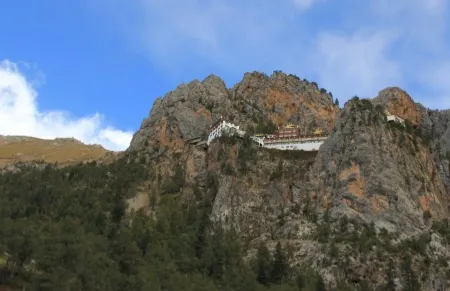
Gar Monastery, one of the largest temples of the White School of Tibetan Buddhism, is situated atop a cliff at an altitude of 4,200 meters. Here, life is equal, and monks coexist peacefully with animals. This place serves as a model of harmony between humans and nature, with Rhesus Macaque,Blue Sheep, and other animals freely moving in and out of the monastery. Occasionally, Maned Serow and White-lipped Deer can be seen in the forest. The three highland pheasants, namely White Eared Pheasant, Buff-throated Monal-Partridge, and Blood Pheasant, are the star species near Gar Monastery and form a unique scenic feature of the Temple.

The swift Lancang River meanders through the Zadoengsa Township of Yushu, creating a beautiful arc and forming the magnificent Angsai Grand Canyon. This canyon is the most complete Cretaceous Danxia geological landscape in the Qinghai-Tibet Plateau and one of the areas with the highest density of Snow Leopards and the best state of conservation for their populations. It is known as the “Land of Snow Leopards.”Blue Sheep in the mountains, Himalayan Marmots play together on the grasslands, and Bearded vultures circle in the sky. Snow Leopards and Leopard cats survey their territories from the rocks at the top of the canyon. Ancient Tibetan herdsmen live in the Angsai Grand Canyon, tending to their yaks and sheep and leading a secluded life. In their settlements, prayer flags and Mani stones symbolize their reverence for nature and deities.
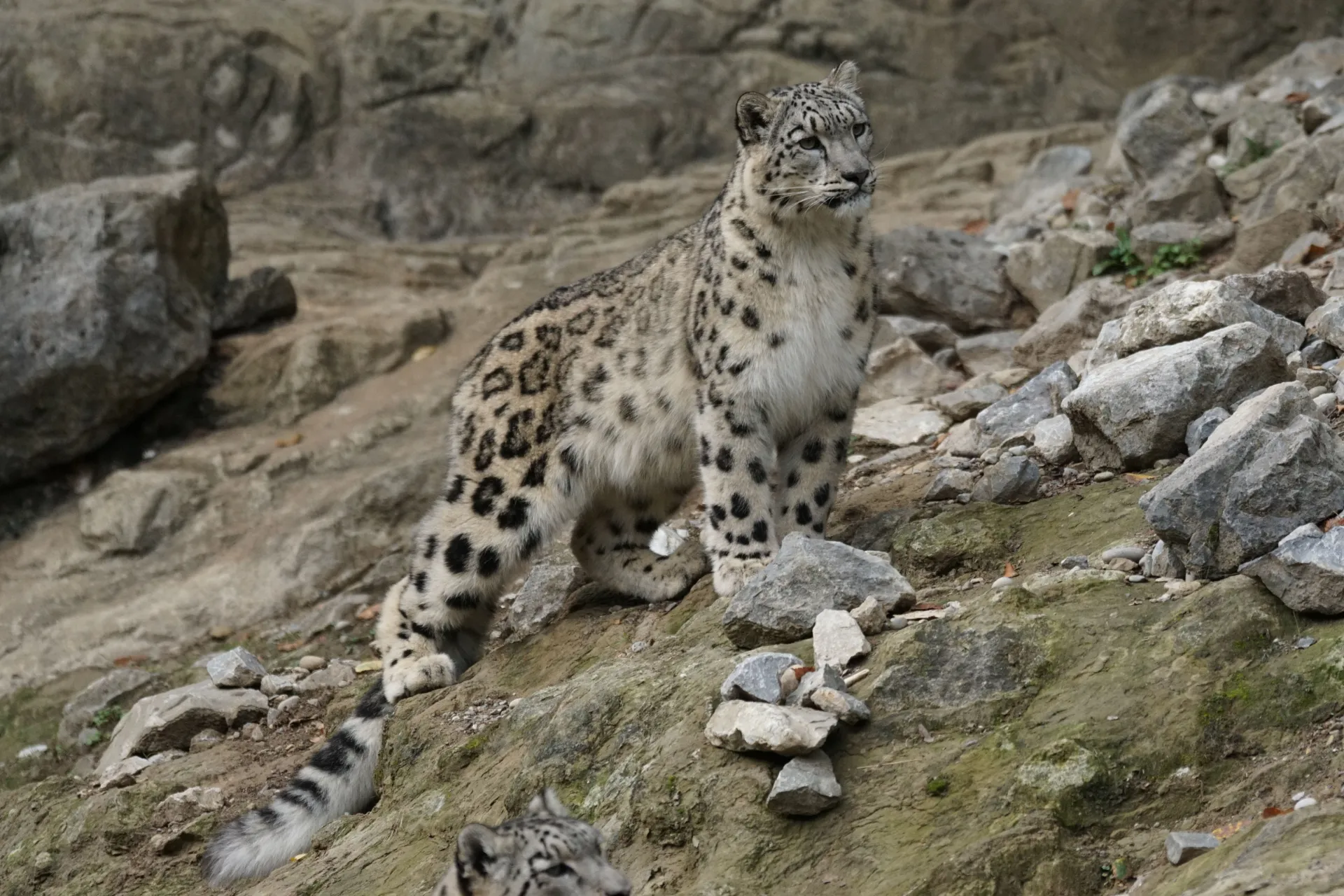
In the Angsai Grand Canyon, search for the tracks of wild animals such as the White-lipped Deer, Blue Sheep, and Alpine Musk-deer.
Continue searching for signs of the Snow Leopard.
Exploring wildlife at night using an infrared camera.
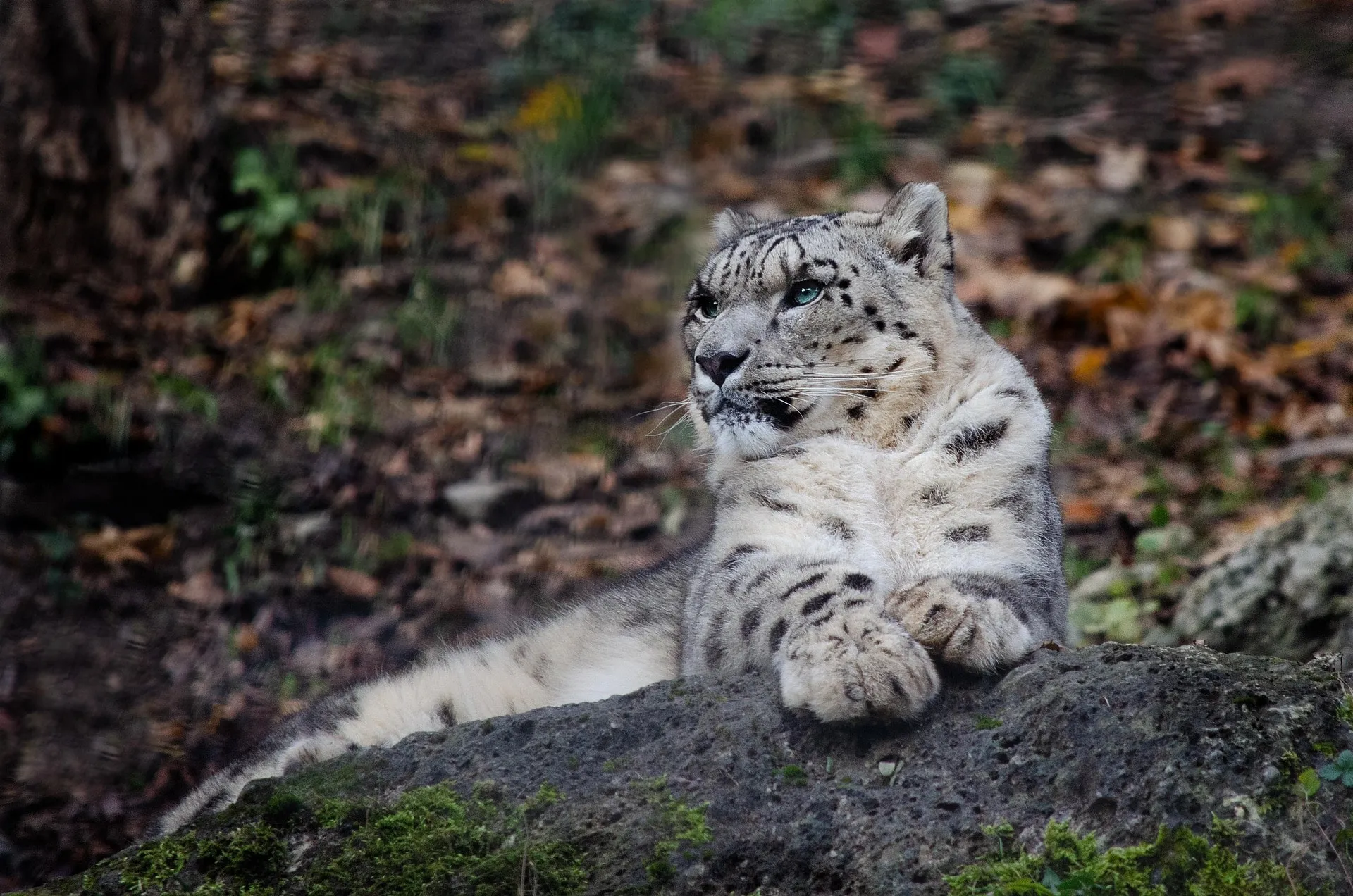
We conducted interviews with local herdsmen in Angsai to gain a deeper understanding of the local ecological environment and the relationship between local herdsmen and wildlife. We also examined the implementation of the Snow Leopard conservation project and the role played by local herdsmen in its implementation.
Under the guidance of our guide, we will search for the tracks of Snow Leopards and other wildlife.
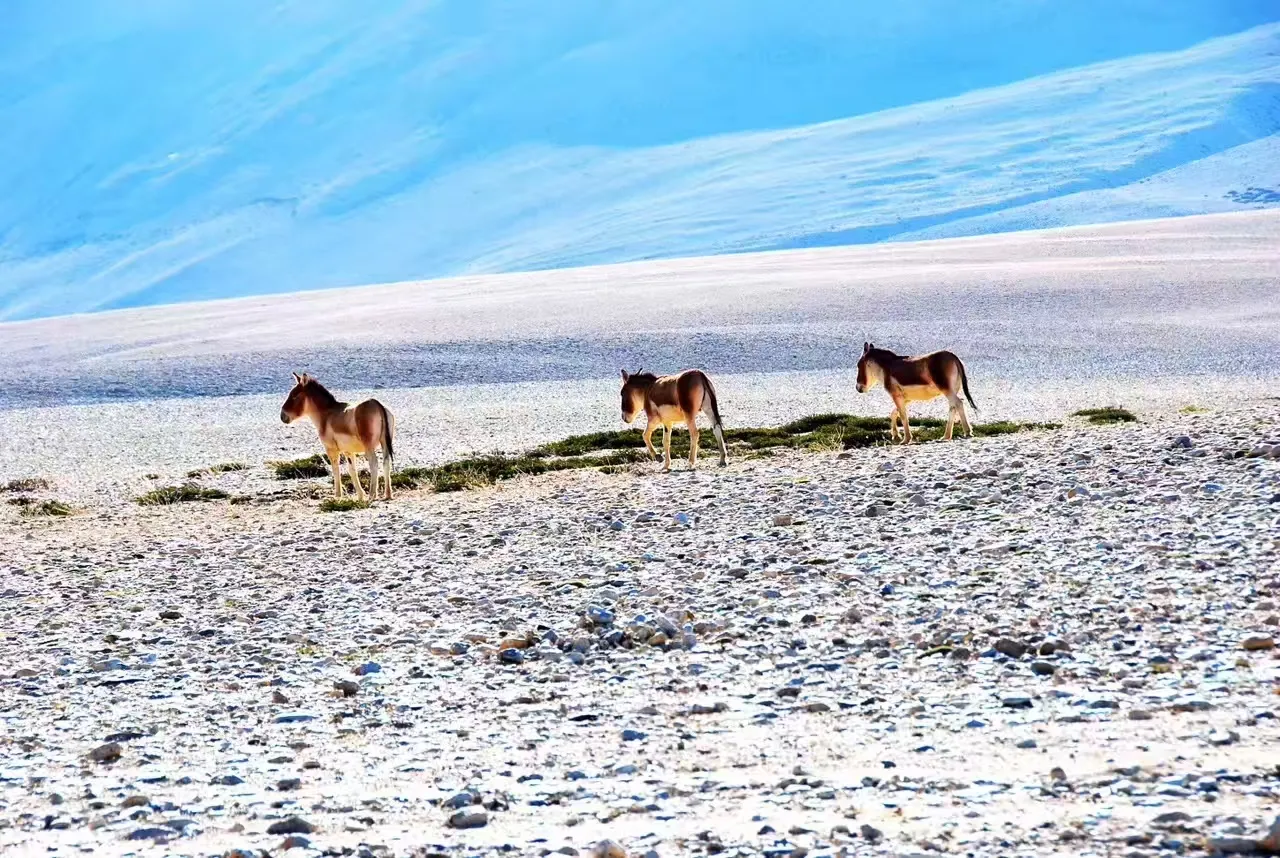
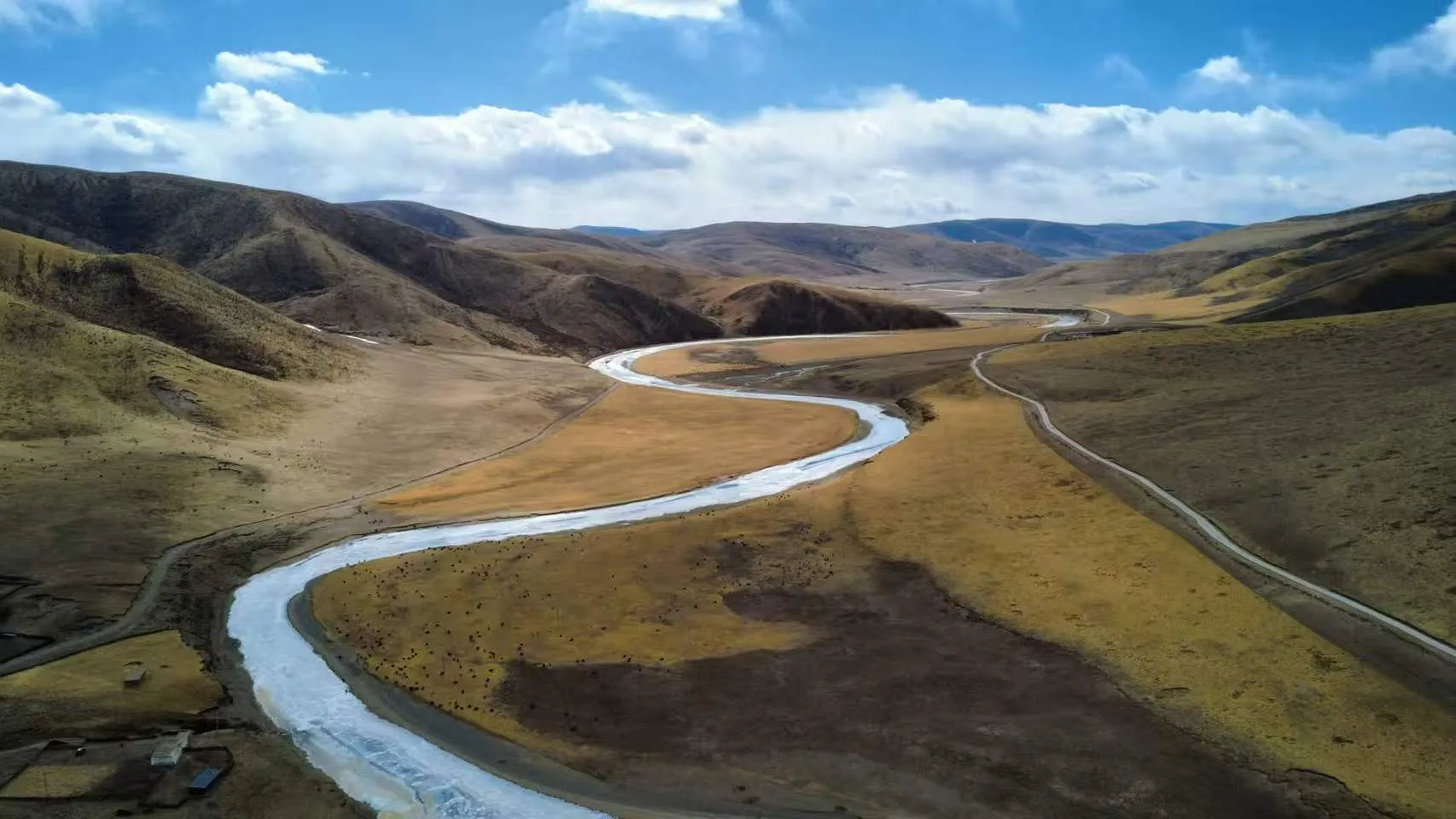
In the vast interior of the Tibetan Plateau, Qumala is the birthplace of the main source of the Yellow River and the northern source of the Yangtze River. As a key area of the “Third Pole of the Earth,” much of the land is arid and extremely cold, making it extremely harsh for human survival. However, it is a paradise for numerous wildlife.
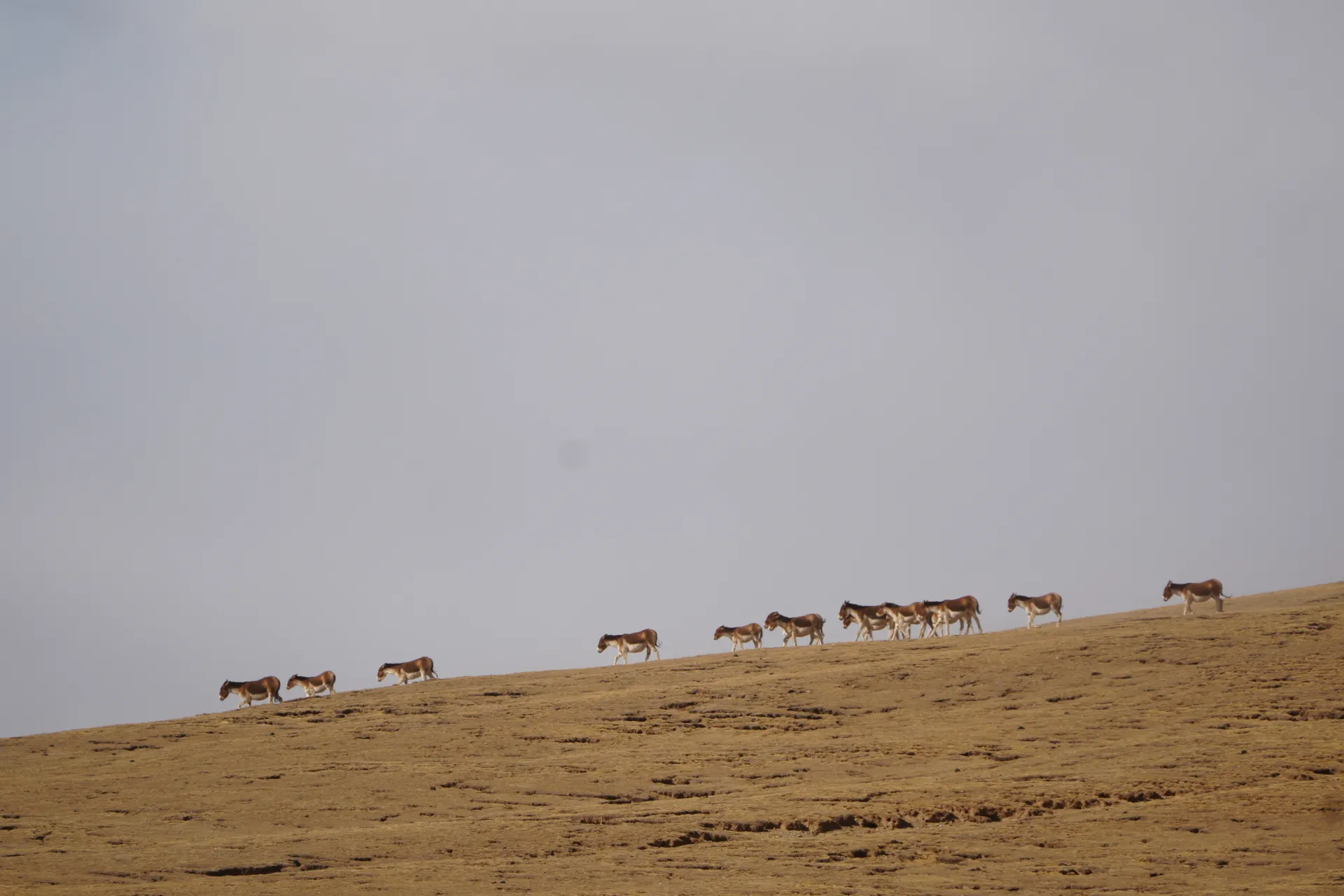
Along the way, you’ll have the opportunity to observe the unique wildlife characteristic of the plateau. Kiang and Tibetan Gazelles roam freely across the highlands. Kiang are often found in small groups of five or six individuals, while larger groups can consist of dozens or even hundreds of individuals. Interestingly, Kiang sometimes enjoy racing against cars. The graceful movements of the Black-necked Cranes and the Bar-headed Goose are perfectly complemented by the vast landscape of the plateau.
The Tibetan Antelope is undoubtedly the star of this land. It is the world’s highest-living hoofed animal. Light and beautiful, with an elegant posture, it is one of the greatest species of life on the plateau.
Every May or June, thousands of Tibetan Antelopes gather in Qumale and set off. They travel in small groups of three or five, or in larger groups of dozens or even hundreds, to move into the heart of the Hoh Xil region in preparation for reproduction. They traverse vast, uninhabited areas solely to ensure the continuation of their species. This area has also become a migration route for Tibetan Antelopes. You will witness a breathtaking display of life's wonders.
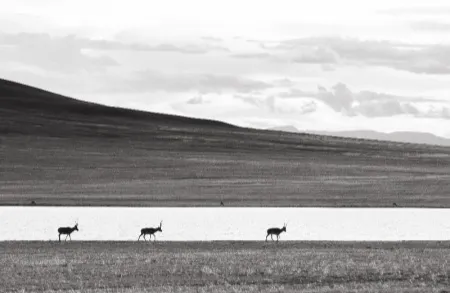
You will travel to the Hoh Xil Nature Reserve to observe once again the magnificent spectacle of the Chiru migration from a viewing platform. This is an exclusive arrangement of ours.
Head to the Songnda Protection Station, which is named after Songnda Jie, a person who sacrificed his life to protect Chiru. Here, you will observe the daily operations of the protection station and have conversations with its staff to learn about the habits and migration routes of Chiru, as well as the development and implementation of the Chiru protection project.
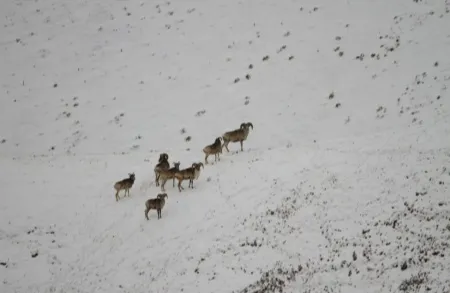
Enter the uninhabited area of the Wild Yak Valley. This is a paradise for desert animals, where hoofed creatures gather. We will search for wild yaks and other species.
Yin Niu Gorge, located just across a mountain range fromHoh Xil Nature Reserve, is an uninhabited area that is truly surprising. It features a diverse range of ecological environments, including high-altitude tundra, high-altitude shrubland, yucca grassland, and needle grass grassland. The snow-capped mountains, grasslands, rivers, and lakes blend seamlessly together.
There are seven species of even-toed ungulates that live here. Most of them are unique to the Qinghai-Tibet Plateau and are one of the few regions where wild yaks are found. The trip to the Wild Yak Valley was undoubtedly a highlight of our journey.
Endangered species such as the Chiru, Argali, White-lipped Deer, Kiang, Wild Yak,Blue Sheep, and Tibetan Gazelle freely roam here. There are also numerous carnivorous animals that inhabit this animal kingdom. Brown Bears, Wolves, Tibetan Foxes, Red Foxes, Eurasian Lynx and Snow Leopards.
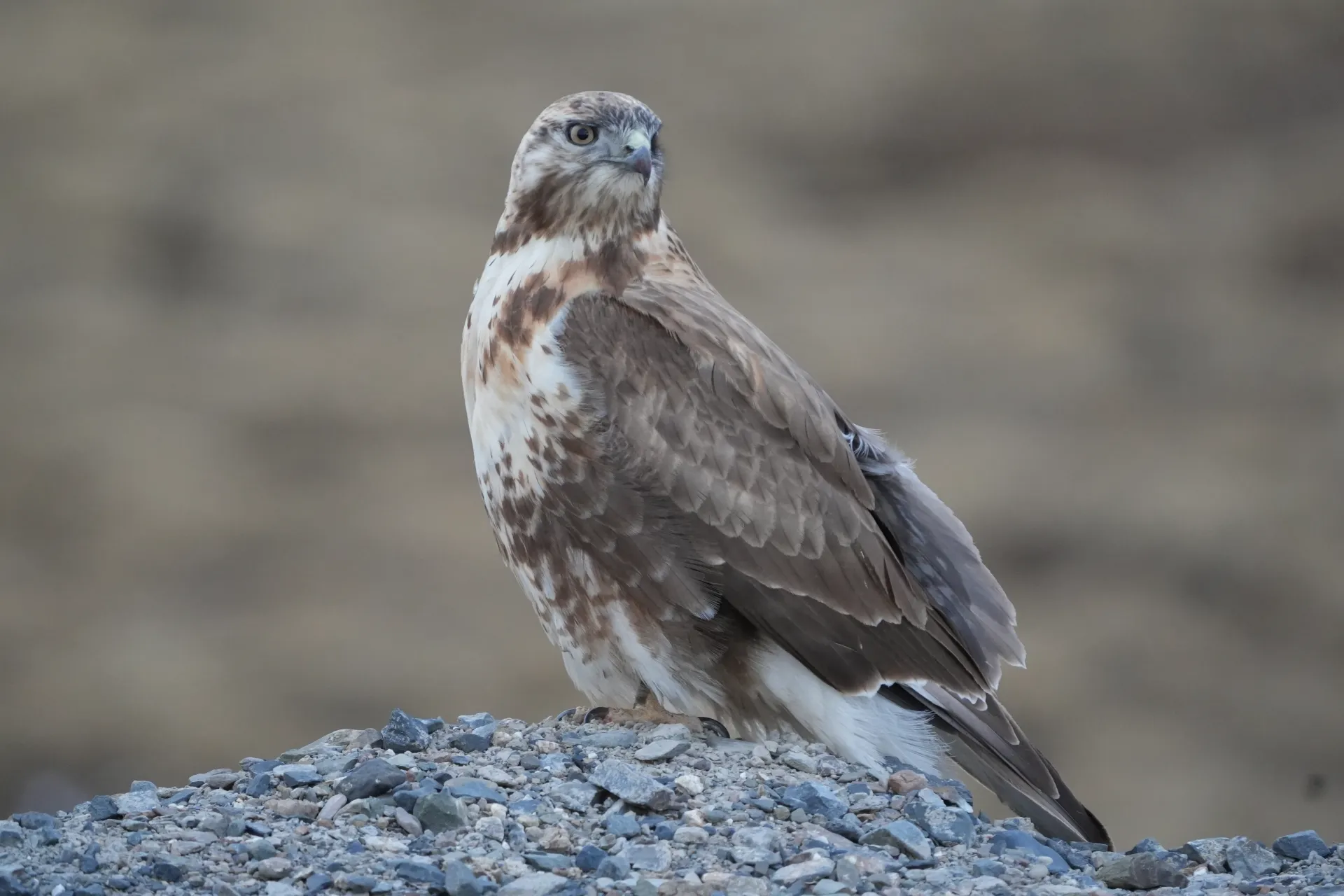
Sky hunters such as Saker Falcons, Eurasian Eagle-Owls, and Upland Buzzard also roam these territories.
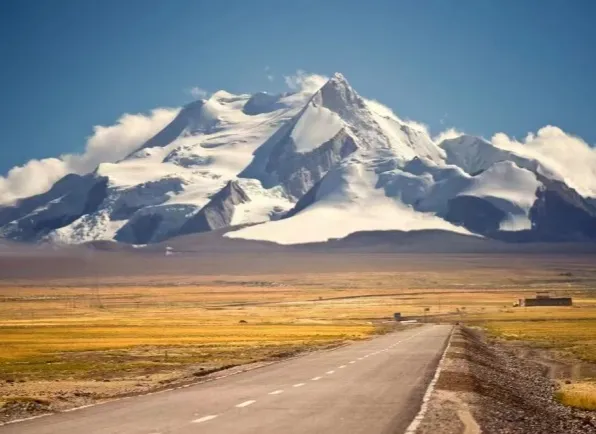
The trip to the Sanjiangyuan National Park is about to conclude, and the leader of Bestecotours will escort you to the airport or to another location for continued travel.
Accommodation and catering


Start customizing your exclusive !
Resources Recommend

You will have an incredible journey, experiencing the work of a panda keeper, visiting the ancient town to learn from a kung fu master as your teacher, and joining the ranks of heroes.
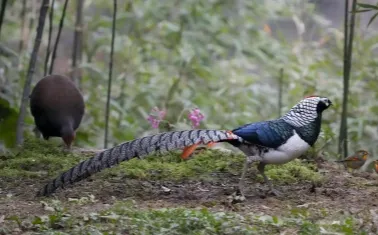
Sichuan not only has unique pheasants in China but is also the most concentrated area of the raven finch in the world, making it a paradise for observing pheasants and raven finches. It is also a gathering place for both ancient and young species, with birds and beasts running wild in the mountains and fields, interpreting the wild side of western Sichuan.

We will take you on an in-depth adventure through the Giant Panda National Park, where you will learn about the wild lives of giant pandas and Sichuan snub-nosed monkeys in their natural habitats, and discover wildlife unique to China. You will also have the opportunity to get involved in giant panda conservation efforts by becoming a giant panda volunteer.Here, you can not only appreciate the beautiful and rich natural environment of China but also deeply experience Chinese culture
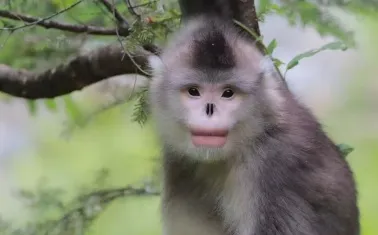
The Shangri-La region is not only a rich species gene bank but also one of the best-preserved biodiversity hotspots in China. Numerous rare and unique species thrive here, including the Yunnan Snub-nosed Monkey, Stryker's Snub-nosed Monkey, Skywalker Hoolock Gibbon, Sclater's Monal, Slender-billed Scimitar Babbler, and Fire-tailed Myzornis. Moreover, this is also one of the most culturally diverse regions in China.


+86-28-62058618

info@bestecotours.com

No. 889, Section 1, Riyue Avenue,
Qingyang District, Chengdu City,
Sichuan Province

Copyright © 2026 •BESTECOTOURS
| Open Positions | Privacy Policy | Terms and Conditions | Manage Cookies