









Start Planning Your Journey
Customized Travel




Contact us

Back to top



Submit to agree to our
Privacy Policy
Sustainable Travel Initiative
Our mission is to protect the environment by exploring habitats, to inspire tourists, support local communities, and to boldly influence the entire tourism industry through innovative measures, thereby protecting our planet and reducing excessive consumption of the Earth.
Ecotourism helps protect the natural environment and wild animals. It provides economic support to local residents and encourages sustainable management of natural habitats.
Of course, conflicts between animals and local residents are widespread. When we work together with community residents and conservation organizations, we can find solutions that can both maintain residents' income and sustain natural resources and the survival of wild animals. For example, in the Yunnan Snub-nosed Monkey Habitat in Shangri-La, China, hunters have transformed into rangers or tour operators and started to protect the Yunnan Snub-nosed Monkey population. The hunters in Gaoligong have put down their guns and provided services for birdwatchers. We believe we are also promoting the ability of local communities to protect nature reserves.


We will take you on an in-depth adventure through the Giant Panda National Park, where you will learn about the wild lives of giant pandas and Golden snub-nosed monkeys in their natural habitats, and discover wildlife unique to China. You will also have the opportunity to get involved in giant panda conservation efforts by becoming a giant panda volunteer.Here, you can not only appreciate the beautiful and rich natural environment of China but also deeply experience Chinese culture
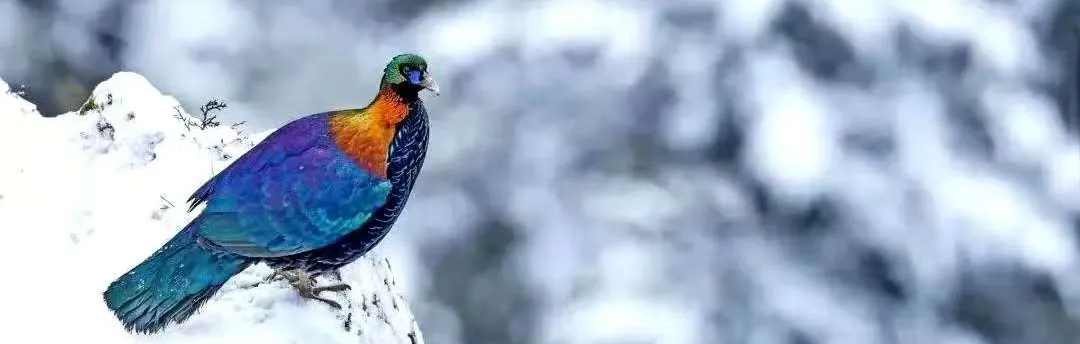
Sichuan not only has unique pheasants in China but is also the most concentrated area of the raven finch in the world, making it a paradise for observing pheasants and raven finches. It is also a gathering place for both ancient and young species, with birds and beasts running wild in the mountains and fields, interpreting the wild side of western Sichuan.
The Sanjiangyuan National Park on the Qinghai-Tibet Plateau, with an average altitude of around 4,600 metres, is a veritable paradise for wildlife. We shall witness the mass migration of Chiru, track snow leopards as they roam the snow-capped mountains, and seek out wild yaks, kiangs, white-lipped deer, blue sheep, Tibetan foxes, black-necked cranes, bar-headed geese and Himalayan vultures – wildlife rarely seen elsewhere.

The Shangri-La region is a uniquely distinctive geographical area, home to hundreds of snow-capped peaks, deeply incised gorges, vast alpine pastures, scattered mountain lakes and vast primeval forests... It serves as a microcosm of the Northern Hemisphere’s biodiversity and ecological environment, and is truly a mecca for flower enthusiasts from around the world. It is also a place of great cultural charm, offering visitors the opportunity to experience China’s diverse ethnic cultures.


+86-28-62058618

info@bestecotours.com

No. 889, Section 1, Riyue Avenue,
Qingyang District, Chengdu City,
Sichuan Province

Copyright © 2026 •BESTECOTOURS
| Open Positions | Privacy Policy | Terms and Conditions | Manage Cookies